
Post 2: "Focus Under Fire: How Shooting Sports Build Attentional Control"
- jrotenberg3
- Apr 11
- 3 min read
Updated: Apr 11
"Focus Under Fire: How Shooting Sports Build Attentional Control"
Competitive shooting presents a unique psychological challenge: you must perform a task requiring microscopic precision while managing the pressure of competition, environmental distractions, and your own internal dialogue. This demands extraordinary attentional control—and the brain adapts in fascinating ways.
The Cardiac Signature of Focus
Before we even look at the brain, something remarkable happens in the body. Research examining cardiac patterns in elite marksmen reveals sophisticated autonomic control: heart rate reduction occurs in the moments before shot execution, reflecting parasympathetic dominance and enhanced attentional focus (Konttinen & Lyytinen, 1992; Tremayne & Barry, 2001).
Elite shooters demonstrate measurable heart rate deceleration in the seconds before trigger pull, reflecting precise autonomic control.
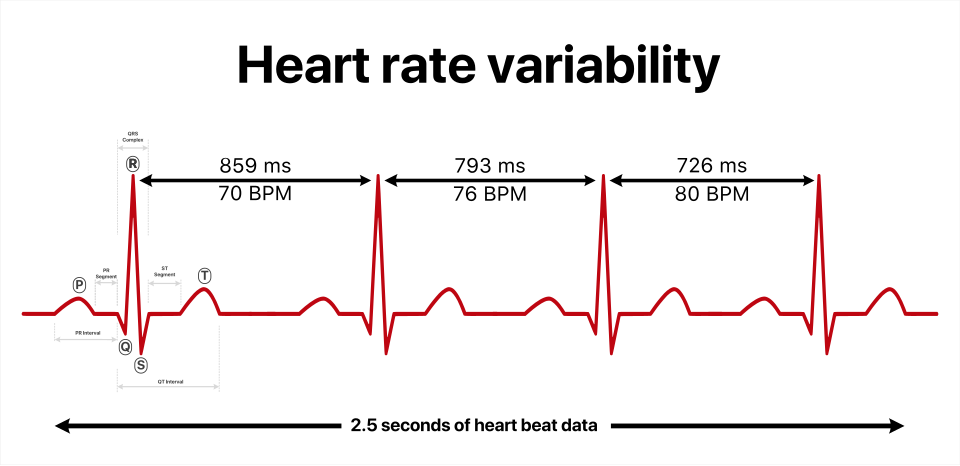
This isn't just relaxation—it's precision autonomic control. Shooters learn to time their shots during natural cardiac deceleration, creating a window of maximum stability. Your body and brain work together to create the optimal physiological state for performance.
The Executive Control Network
Two brain regions stand out in shooting performance: the anterior cingulate cortex (ACC) and dorsolateral prefrontal cortex (DLPFC). These areas are central to conflict monitoring and executive control, and they show training-related plasticity in experienced shooters (Di Russo et al., 2005).
[INSERT IMAGE: Brain anatomy highlighting anterior cingulate cortex and dorsolateral prefrontal cortex] Caption: The anterior cingulate cortex and dorsolateral prefrontal cortex—key regions for executive control—show enhanced function in trained shooters.
What does this mean practically? The ACC acts like an internal performance monitor, detecting when something's off—your stance isn't quite right, your breathing rhythm has changed, or you're rushing the trigger pull. The DLPFC helps you override impulses and stick to your technique even when fatigue or frustration tempt you to abandon form.
This neuroadaptation underlies improved abilities to:
Detect performance errors before they happen
Adjust strategies based on feedback
Maintain goal-directed behavior despite frustration or fatigue
Resist distractions in the environment
Beyond the Range
Here's what makes this especially interesting: these cognitive skills aren't confined to shooting. The enhanced executive function developed through shooting sports potentially transfers to everyday tasks requiring concentration and self-regulation (Vickers & Williams, 2007). Learning to maintain focus while managing arousal is a generalizable skill.
Sustained Attention Training
Unlike many sports where attention shifts rapidly, shooting demands sustained focus on a single task. This trains what neuroscientists call "tonic alertness"—the ability to maintain readiness over extended periods. The discipline requires you to:
Maintain focus amid distractions
Inhibit premature responses (not rushing the shot)
Regulate arousal levels to optimize performance
Monitor multiple internal and external variables simultaneously
[INSERT IMAGE: Attention network diagram showing sustained vs. divided attention neural pathways] Caption: Shooting sports specifically train the sustained attention network, strengthening neural pathways for prolonged focus.
This is essentially executive function training disguised as sport.
The Pressure Paradox
Competition creates a paradox: the stakes matter enormously, yet caring too much about outcomes degrades performance. Shooters must develop what psychologists call "task-focused" rather than "ego-focused" attention. Your brain learns to direct attention toward controllable technical elements (breathing, trigger press, sight alignment) rather than outcomes (score, rankings, what others think).
This cognitive skill—maintaining task focus under evaluative pressure—has obvious applications beyond sport.
[INSERT IMAGE: Yerkes-Dodson curve showing inverted-U relationship between arousal and performance]
Caption: The Yerkes-Dodson law illustrates why optimal performance requires moderate arousal—too little or too much both degrade accuracy.
Measuring Mental Quietness
Advanced shooters often describe a quality of mental silence before good shots. Neuroscience validates this: the alpha wave increases we discussed in Post 1 reflect reduced cortical "noise." Your brain isn't chattering anxiously; it's in a state of alert calm.
Developing this capacity requires thousands of repetitions, but the neural adaptation is real and measurable.
Conclusion
Shooting sports function as a laboratory for training attentional control. The immediate, objective feedback (you hit the target or you didn't) combined with the requirement to perform under observation creates ideal conditions for developing executive function and sustained attention.
These aren't just athletic skills—they're fundamental cognitive capacities that shape how effectively you navigate challenge and pressure in any domain.
Next in the series: we'll explore how shooting cultivates extraordinary body awareness and why proprioception matters far beyond the range.
References:
Di Russo, F., Pitzalis, S., Aprile, T., & Spinelli, D. (2005). Effect of practice on brain activity: An investigation in top-level rifle shooters. Medicine & Science in Sports & Exercise, 37(9), 1586-1593.
Konttinen, N., & Lyytinen, H. (1992). Physiology of preparation: Brain slow waves, heart rate, and respiration preceding triggering in rifle shooting. International Journal of Sport Psychology, 23(2), 110-127.
Tremayne, P., & Barry, R. J. (2001). Elite pistol shooters: Physiological patterning of best vs. worst shots. International Journal of Psychophysiology, 41(1), 19-29.
Vickers, J. N., & Williams, A. M. (2007). Performing under pressure: The effects of physiological arousal, cognitive anxiety, and gaze control in biathlon. Journal of Motor Behavior, 39(5), 381-394.

Comments